
AMC Calls on Manitoba for New Approach to Provincial Economic and Infrastructure Planning
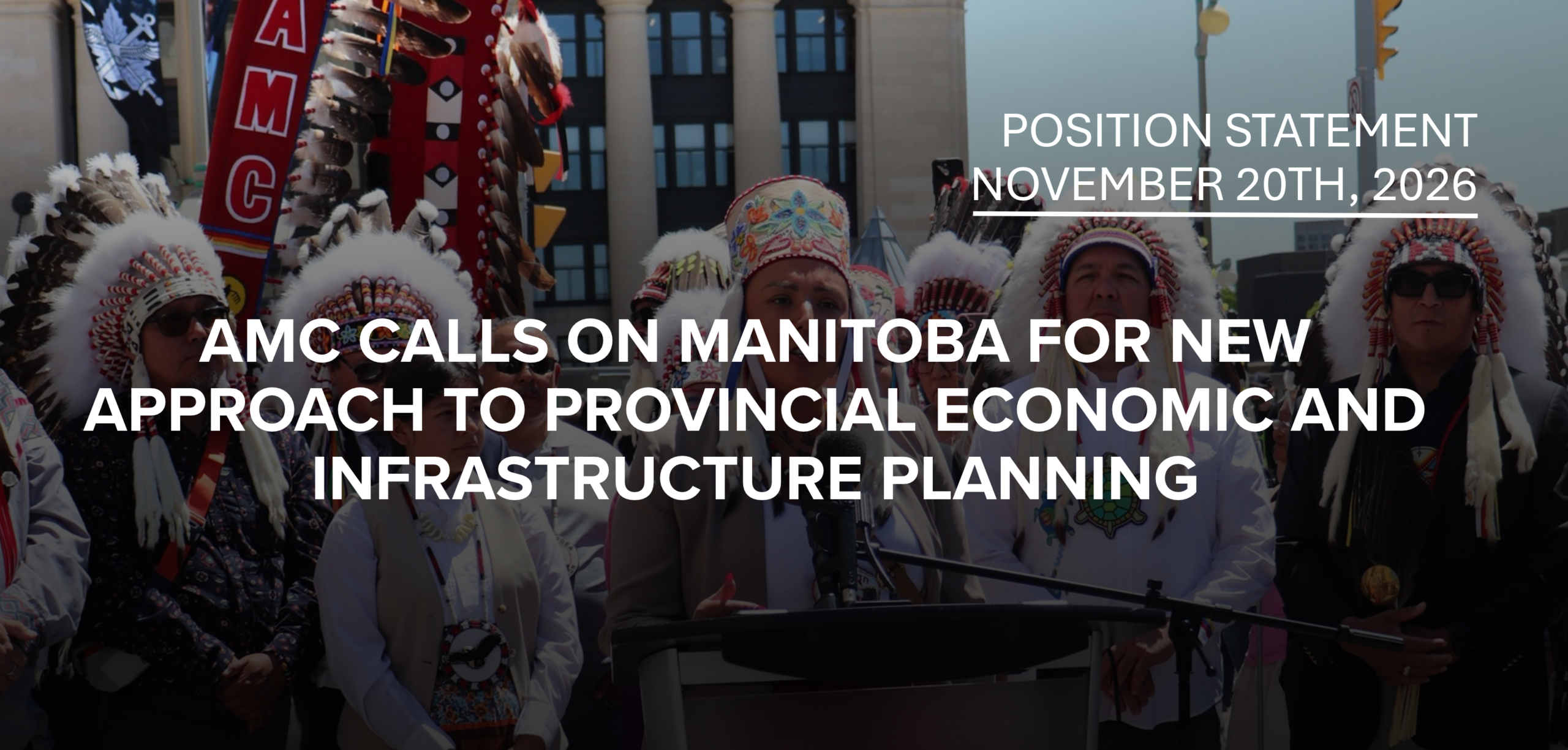
November 20, 2026
Treaty One Territory, Manitoba
AMC Communications
Position Statement in response to Speech from the Throne
November 20, 2026
AMC Calls on Manitoba for New Approach to Provincial Economic and Infrastructure Planning
Treaty One Territory (Winnipeg) – The Assembly of Manitoba Chiefs (AMC) is calling on the Manitoba government to establish a new approach to provincial economic and infrastructure development—one that recognizes First Nations authority and involves First Nations leadership from the earliest stages of planning.
The November 17 Speech from the Throne sets out an ambitious agenda for critical mineral development, northern transportation, energy infrastructure and increased international trade. The Premier has also identified a proposed natural gas pipeline to Hudson Bay, with the goal of shipping liquefied natural gas through Churchill by 2030. The appointment of a Chief Mining Officer, whose responsibilities will extend to advancing this pipeline initiative, signals the scale of the Province’s development ambitions.
These plans have significant implications for First Nations throughout Manitoba. They cannot be developed through provincial planning processes that treat First Nations as parties to be consulted after priorities, routes and investment decisions have already been established.
“First Nations must be involved before these plans take shape, not after governments have decided what development will look like,” said Grand Chief Kyra Wilson. “Our Nations have their own laws, governments, priorities and responsibilities to our territories. Manitoba cannot plan its economic future around our lands and resources without recognizing our authority and ensuring our leadership has a meaningful role in shaping what comes next.”
AMC is calling for a province-wide process that brings First Nations leadership into the earliest stages of resource, energy and infrastructure planning, including the proposed LNG pipeline, critical mineral development and transportation corridors. This must include access to information, the ability to shape planning and assessment processes, and recognition of the rights and decision-making authority of each potentially affected Nation.
The Province’s planned review of the Environment Act is particularly important. Improving impact assessments and regulatory processes must not become a means of accelerating development at the expense of Treaty rights, First Nations jurisdiction, environmental protection or free, prior and informed consent. First Nations must help shape the review and any resulting changes to the assessment framework.
AMC also recognizes the potential of the Province’s work to protect the Seal River Watershed and Western Hudson Bay. These initiatives must support First Nations leadership, stewardship and authority, with meaningful decision-making roles and long-term resources for the Nations whose territories and waters are involved.
Manitoba’s economic ambitions must also translate into lasting economic benefits for First Nations. Through international trade missions and engagement in India, Japan, Mexico and China, AMC and Grand Chief Wilson have been pursuing relationships that can support First Nations investment, trade and economic development.
The Port of Churchill presents an opportunity to build more than a transportation corridor for Manitoba’s resources. It can support First Nations ownership, business development, investment and equitable sharing of the wealth generated from the lands and resources that make these projects possible. Employment and procurement opportunities are important, but they cannot replace jurisdiction, ownership or a rightful share of resource revenues.
The Chiefs-in-Assembly have provided direction on a First Nations-led governance and revenue-sharing approach. AMC is calling on Manitoba to respond substantively to that direction and work with First Nations leadership to advance an arrangement that recognizes First Nations authority and establishes equitable, ongoing participation in resource wealth.
The Province’s commitments on emergency management, flood relief, housing and homelessness also require greater attention to First Nations priorities. Expanding provincial emergency management capacity must be accompanied by dedicated support for First Nations preparedness, response and recovery. The Province’s commitment to end chronic homelessness by 2031 must include measurable outcomes for First Nations citizens, including those living off reserve and those displaced from their Nations due to long term evacuations or access to medical supports. These longstanding needs cannot remain separate from Manitoba’s broader economic and infrastructure agenda.
AMC further awaits a substantive response from Premier Wab Kinew regarding the Natural Resources Transfer Agreement (NRTA). First Nations were not parties to the 1930 agreement and did not surrender their inherent or Treaty rights to their lands and resources. AMC continues to call for its full repeal and negotiations toward a replacement arrangement that respects First Nations rights, jurisdiction and responsibilities. This call was most recently made by AMC member Nations at the First Nations First Ministers Meeting.
AMC is calling on the Manitoba government to:
- Establish a formal process for First Nations leadership throughout Manitoba to participate in provincial resource, energy and infrastructure planning from the outset, including the proposed LNG pipeline and critical mineral developments.
- Recognize the decision-making authority and rights of each potentially affected Nation, including their role in determining whether and how development proceeds in their territories.
- Respond to the First Nations-led governance and revenue-sharing direction of the Chiefs-in-Assembly.
- Advance equitable, ongoing resource revenue-sharing and meaningful opportunities for First Nations ownership and investment.
- Involve First Nations leadership in the review of the Environment Act and ensure environmental assessment processes respect Treaty rights, jurisdiction and consent.
- Work with First Nations on sustained emergency management capacity, housing and homelessness priorities, and First Nations-led stewardship initiatives.
- Begin substantive discussions on the full repeal of the NRTA and negotiations toward a replacement arrangement.
“We are supportive of economic development in this province. But we are insisting that it proceed on a different foundation—one that respects our rights, recognizes our authority and ensures our people share in the wealth generated from our territories,” said Grand Chief Wilson. “Manitoba has an opportunity to build a stronger economic future, but it cannot be built by repeating the same history of decisions made without us. First Nations must be part of shaping that future from the beginning.”
AMC remains prepared to work constructively with the Manitoba government. The measure of progress will not simply be the number of projects advanced, minerals extracted or goods shipped to international markets. It will be whether First Nations rights are respected, authority is recognized and the benefits of development are shared equitably.
– 30 –
BACKGROUND
The Assembly of Manitoba Chiefs represents 63 First Nations in Manitoba. AMC advocates for the recognition and protection of First Nations inherent and Treaty rights, jurisdiction, and the priorities established by First Nations leadership.
The Natural Resources Transfer Agreement, implemented in 1930, transferred administration and control of Crown lands and natural resources to Manitoba. First Nations were not parties to the agreement. AMC maintains that First Nations never surrendered their inherent and Treaty rights to their lands and resources and continues to call for the NRTA’s repeal and negotiations toward a replacement arrangement that respects those rights.
Media Contact:
Communications Team
Assembly of Manitoba Chiefs
media@manitobachiefs.com